
Omnichannel ecommerce platform
built for modern retail
RDEP Ecommerce gives retailers everything they need to run digital commerce—from storefronts and product catalogs to checkout, payments, orders and fulfillment.
Built on the RDEP retail platform, Ecommerce connects the digital storefront with the products, inventory, customers and operations behind your business.





Complete Ecommerce Product
Storefront, catalog, checkout, payments, orders, fulfillment and analytics in one ecommerce solution.
Enterprise Commerce
Built to support complex catalogs, markets, commercial models and operational requirements.
B2B + B2C + B2B2C
Support consumer, business and hybrid commerce through the same ecommerce foundation.
Connected Retail
Extend ecommerce into the same platform powering your stores and other retail experiences.
Omnichannel by design
Ecommerce that works across the entire retail experience
RDEP Ecommerce is designed for retailers whose customers move between digital and physical channels. The ecommerce product connects to the same retail foundation used across stores, giving products, inventory, orders and customer context a common operational foundation.
A customer can discover a product online, see availability at a store, purchase digitally, collect or receive it, return it through another channel and continue the relationship with the same retailer.
Online + Store
Connect your ecommerce experience with physical retail, so online and in-store selling run on one retail foundation.
Shared Product Data
Keep products, variants and commercial information connected. One catalog serves every channel, with pricing set per channel or store.
Connected Inventory
Give channels visibility into inventory across stores, warehouses and fulfillment locations, so multi-channel inventory management runs from one shared view of stock.
Connected Orders
Maintain one view of online and physical transaction activity. Multi-channel order management brings web orders and store transactions into a single record.
Connected Customers
Carry customer and purchase context across touchpoints, so each visit, online or in store, starts from the same history.
Cross-Channel Fulfillment
Use your retail network as part of the ecommerce fulfillment model, with stores and warehouses supporting collection, delivery and returns.
- Discover
- Browse
- Purchase
- Fulfill
- Receive
- Return
- Re-engage
- Discover
- Browse
- Purchase
- Fulfill
- Receive
- Return
- Re-engage
One customer journey, carried across every channel.
Powered by RDEP
One connected commerce platform, from store to online
RDEP Ecommerce operates as a complete product in its own right.
Its advantage is that it runs on the same RDEP platform as the products and capabilities already supporting the retail business.
That creates a connected environment where ecommerce works alongside physical selling, customer engagement and centralized retail management. For enterprise retailers, it means one commerce platform, one data foundation and one place to manage every channel.
RDEP retail platform
Products, inventory, orders and customers on one foundation, shared by every product around it.
- Shared data
- Shared operations
- Shared reporting
- OnlineThis product
Ecommerce
Digital storefronts, catalogs, checkout and online orders, running on the same platform as your stores.
- In store
mPOS
Mobile POS for assisted selling across the store floor, connected to the same products and inventory as ecommerce.
- In store
Self-Checkout
Independent customer checkout experiences in store, on the same platform that carries your online orders.
- After purchase
Smart Receipts
Digital purchase records and post-purchase engagement that carry the customer relationship beyond the transaction.
- Engagement
Campaign Manager
Customer engagement powered by retail activity, so campaigns follow what customers do across the business.
- Management
Master Console
Centralized management, operational visibility and reporting: the single backend where every RDEP product is managed.
One data foundation
Products, inventory, orders and customers sit on a foundation shared by every RDEP product.
One place to manage
Master Console brings management, operational visibility and reporting together across every product and channel.
2,000+
Stores already on the platform
Ecommerce extends the same infrastructure that already runs physical retail.
One ecommerce product. A retail platform working behind it.
Security & Data Control
Your Data. Your Infrastructure. Your Terms.
Most ecommerce platforms run a storefront, customer records, and order history on shared, multi-tenant infrastructure — the same environment as every other merchant on the platform. RDEP works differently.
An infrastructure decision the business makes.
- 01
Choose your deployment
Private cloud infrastructure dedicated to the business, or a hybrid model that keeps sensitive data under direct control — data ownership is an infrastructure decision the business makes, not a default inherited because the platform only offers one option.
- 02
Security built into the infrastructure
Encryption in transit and at rest, environment isolation, and configurable data residency are part of how RDEP is deployed, not add-ons layered on afterward.
- 03
Compliance as a property of the platform
Compliance isn't a separate workstream bolted on after launch. It's aligned to the regulatory posture each market requires, built into the infrastructure itself.
- 04
One security posture, every channel
Online and in-store share the same data layer, so a rule enforced for the storefront is enforced everywhere else running on the same infrastructure.
B2B & International Commerce
B2B commerce built around your customer relationships
Enterprise B2B commerce is defined by the relationship between the seller and the buyer. Different accounts can carry different products, prices, contracts, purchasing volumes, payment terms and ordering requirements.
Most B2B ecommerce still runs on one shared price list with manual overrides layered on top. RDEP's Price Book works differently: pricing scoped per account and per contract, live in production today inside an existing ProenX enterprise deployment.
A wholesale buyer, a franchise partner and a retail customer can see three different catalogs and three different prices, drawn from the same underlying product data.
Case of 24 — sample product
MOQ 200 units · Net 60
$18.40
- 01
Buyer-Specific Catalogs
Present each account with the products relevant to its business, drawn from the same catalog that powers every other channel.
- 02
Price Books
Define pricing by customer, account or commercial relationship, scoped per login so different buyers see different numbers.
- 03
Contract-Based Pricing
Apply agreed prices based on negotiated commercial agreements, enforced automatically at checkout.
- 04
Minimum Order Quantities
Support purchasing rules and volume requirements set at the product or account level.
- 05
Purchase Orders
Support established business purchasing workflows and procurement processes.
- 06
B2B Checkout
A checkout experience built around business purchasing: multi-line orders, PO numbers and account-based terms.
Selling Across Borders
One platform, running in every market you sell into
Selling across borders means duties, customs documentation and delivery timelines that vary by destination. RDEP's shipping partner integrations, automated duties and tax calculation, and auto-generated customs documentation handle that per order.
Multi-currency and multi-language storefronts extend the same platform running everywhere else.
- Shipping partner integrations
- Automated duties & tax calculation
- Auto-generated customs documentation
- Multi-currency storefronts
- Multi-language storefronts
One commerce foundation. Different experiences for every kind of buyer.
Product & Catalog Management
Ecommerce Catalog Management for Complex, Multi-Brand Assortments
Large retail businesses need more than a single list of products. RDEP provides centralized ecommerce catalog management across products, variants, SKUs, attributes, pricing, availability and assortments — one system of record instead of a patchwork of spreadsheets and channel-specific tools.
That creates a consistent product foundation for every channel, while still giving teams the flexibility to manage the differences required by markets, locations, customers and commerce models.
Classic oxford shirt
Blue · M
Studio leather tote
Sand · One size
Trail runner sneaker
Graphite · 9
Wholesale carton, 24pk
Mixed · Case
- 01
Central Product Management
Maintain product data, variants, attributes and SKUs in one place, as the single source of truth for every channel.
- 02
Multi-Channel Catalogs
Manage assortments across ecommerce and physical retail channels from one connected catalog.
- 03
Product Availability
Control where and when products are available for purchase, down to the market, location or channel.
- 04
Channel-Specific Commerce
Apply different pricing, availability and assortment rules for each channel or commercial model, exactly where the business requires it.
Order Management
Multi-channel order management in one place
Once a sale happens, it needs to be found, checked and acted on fast. RDEP brings every order into a single place in Master Console — whether it came from your storefront, a phone order, or a walk-in invoiced on the spot — as genuine multi-channel order management, built into the platform from day one.
One order inbox, fully searchable
Filter, sort, tag, and search orders by status, destination, product, or customer — find the exact order you need in seconds, not by scrolling through a list.
Bulk order actions
Fulfill, cancel, or update multiple orders at once instead of opening each one individually — a batch of ten orders takes the same effort as one.
Draft orders and invoices
Create an order or invoice manually, for a phone sale, a custom quote, or a B2B request, and send it to be paid online or in person.
Real inventory states
Know what's on hand, what's committed to existing orders, and what's actually available to sell, across every location.
842
On hand
216
Held
626
Free
Purchase orders for restocking
Track incoming stock from suppliers with purchase orders, so you know what's arriving and when, before it reaches the shelf or the website.
Payments
Connected to the payment gateways your market already trusts
RDEP is a payment gateway integrator. Checkout connects to the payment gateway partners a market already relies on, so cards, digital wallets and the other payment methods shoppers expect are available from day one.
Bring your own regional gateway
Need a specific processor for a market or currency? RDEP connects it alongside the payment gateways already running everywhere else — one integration approach that extends to any processor a market requires.
One dashboard, every method
Cards, wallets, BNPL and bank transfers all run side by side, configured once and monitored from Master Console — the same place other RDEP payment activity lives, in-store, online, or both.
Shipping & Fulfillment
Multi-carrier shipping, managed from one dashboard
Running more than one carrier means managing different rates, label formats and tracking feeds. RDEP brings rate shopping, label generation and tracking into a single multi-carrier dashboard, run from Master Console.
Rate calculation
Live carrier rates show at checkout, so shoppers see the accurate shipping cost before they pay.
Shipping, at checkout$6.20Multi-carrier routing
Route each order by destination, weight, cost, or delivery promise, from one multi-carrier dashboard.
Carrier ABestCarrier BBestCarrier CBestLabel generation
Generate shipping labels directly from the order, from the same console used for the rest of fulfillment.
Label ready
PDF · 4×6
Fulfillment tracking
Tracking numbers sync to the order the moment a carrier updates them, and flow straight through to the customer in real time.
PackedShippedDelivered
Carrier accounts, shipping zones and rate rules are configured once in Master Console and apply across every order automatically.
Store Analytics
Every number, in one Master Console
Storefront traffic, conversion and product performance dashboards live in Master Console, giving retailers a genuine ecommerce analytics platform for the online store. If the business also runs physical stores, the same Master Console already reports on those too, for real omnichannel reporting: customer, sales and SKU-level data across every channel, in one place.
Traffic, conversion, and other ecommerce analytics metrics, scoped to your storefront.
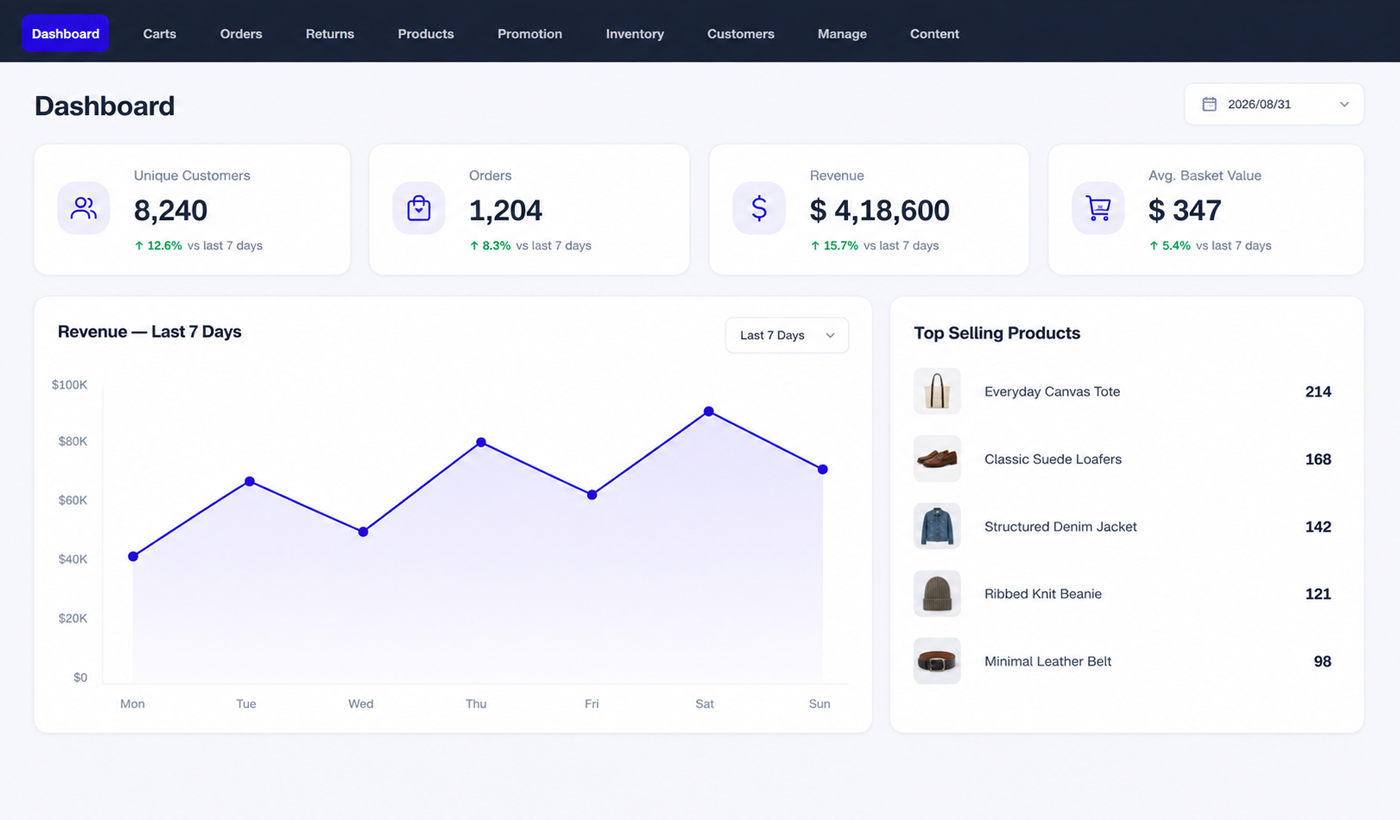
Turn insight into a campaign
See a SKU underperforming, or a customer segment going quiet? Act on it directly in Campaign Manager.
Returns & Exchanges
Self-serve returns and exchanges, backed by rules you control
RDEP gives shoppers a self-serve way to request a return, and gives the business the rules to control how those requests get handled.
Re: Return request — Order #1042
support@yourstore.com
Customer waits for a reply.
Structured Denim Jacket
Reason: Wrong size
Customer resolves it directly.
Configurable Return Rules
Set your own return window, restocking fees and exceptions for final-sale or non-returnable items, so every request is checked automatically against those rules.
Direct Exchanges
Let customers swap directly for a different size, color or item, completing an exchange in a single request.
Return-Aware Reporting
See which products get returned most, turning a pattern into a signal, connected straight into Store Analytics.
Storefront & Themes
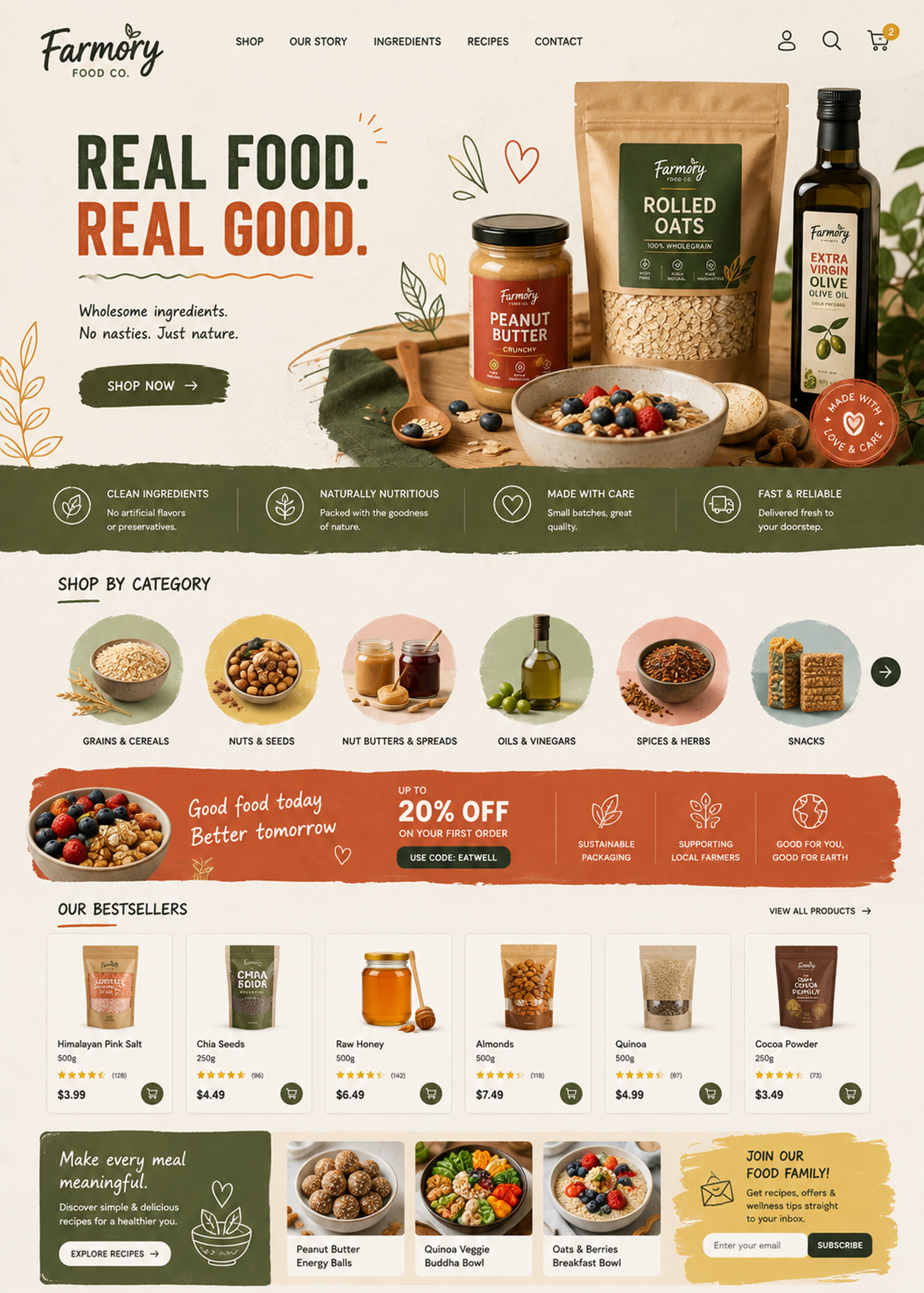
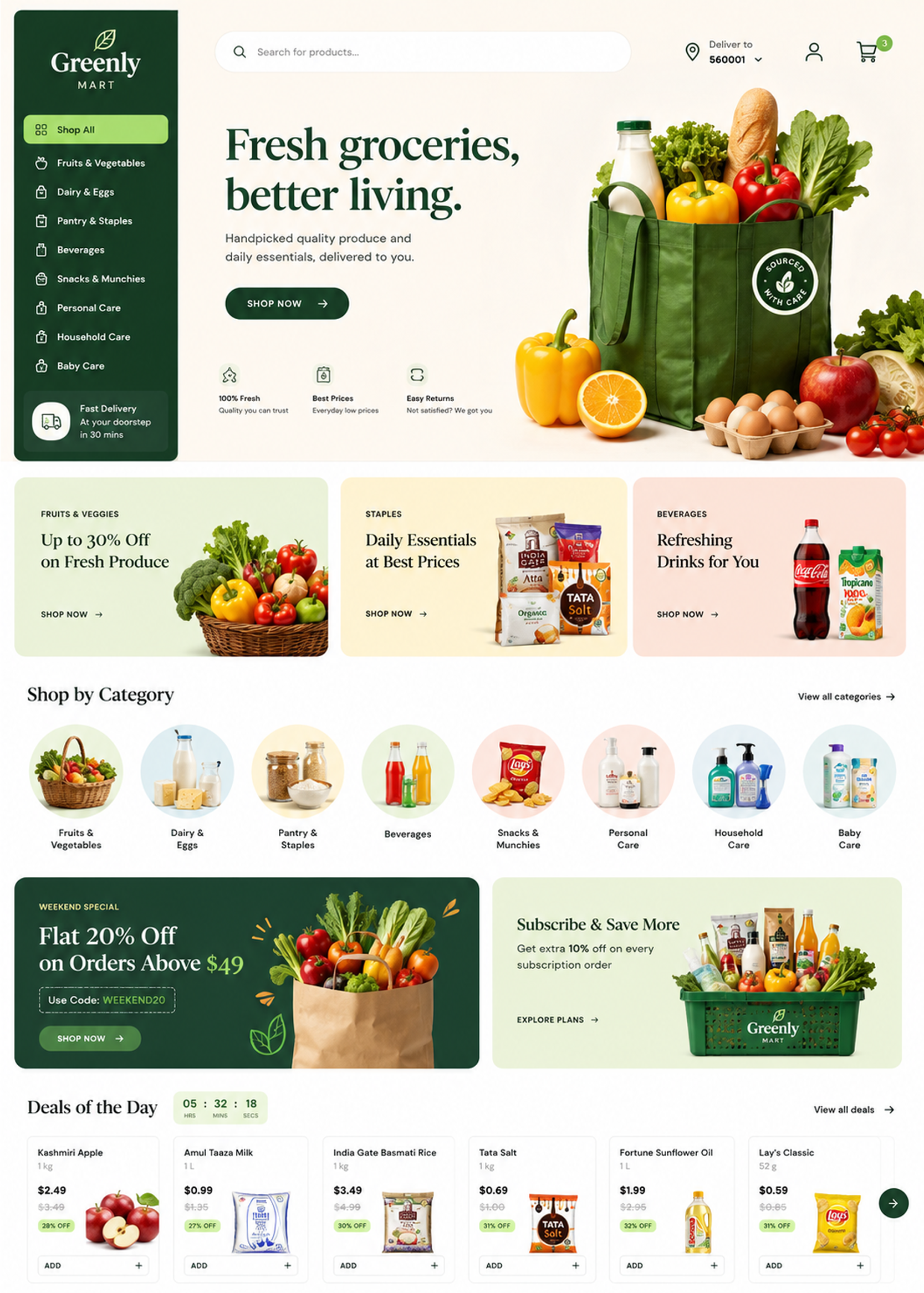
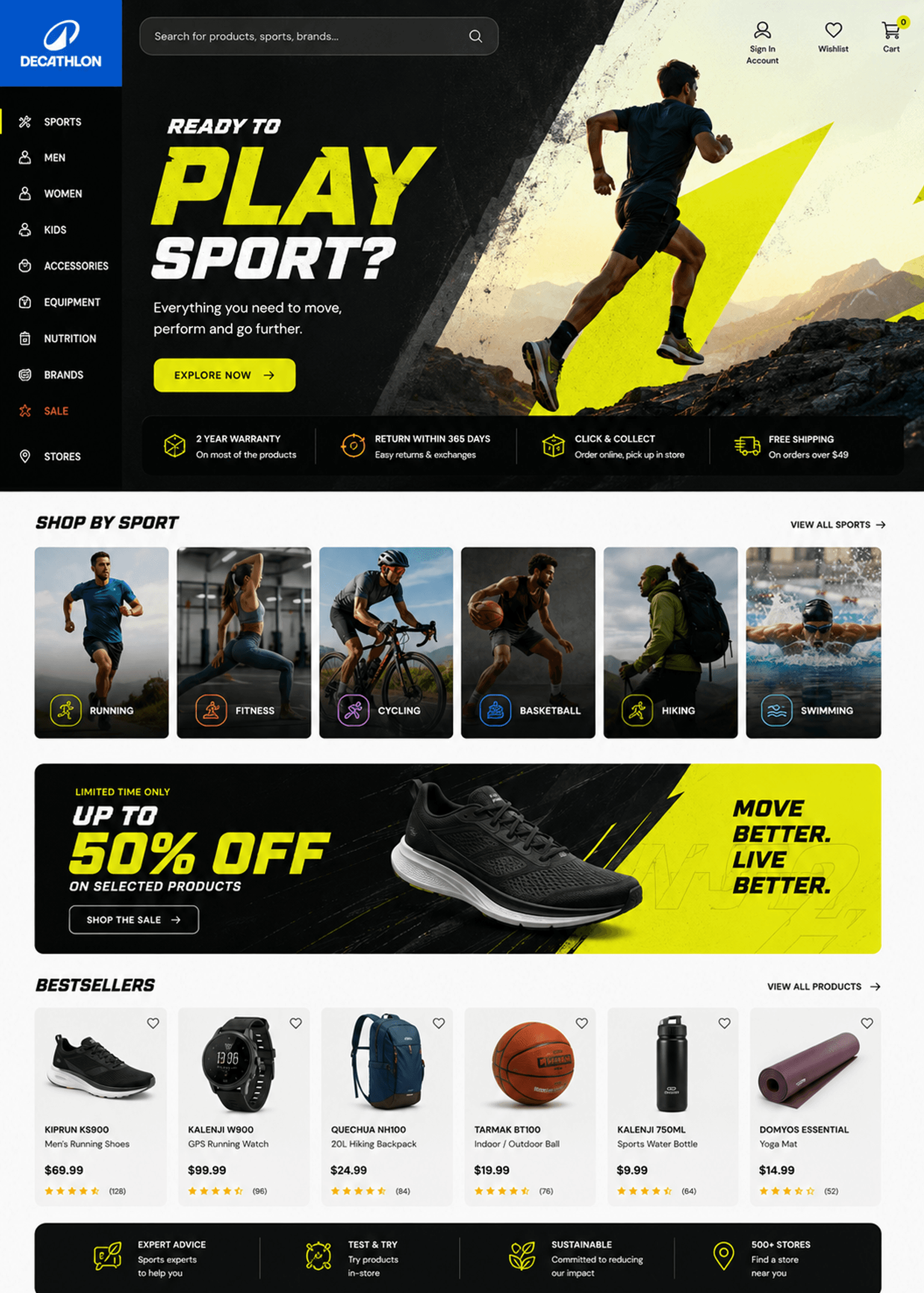
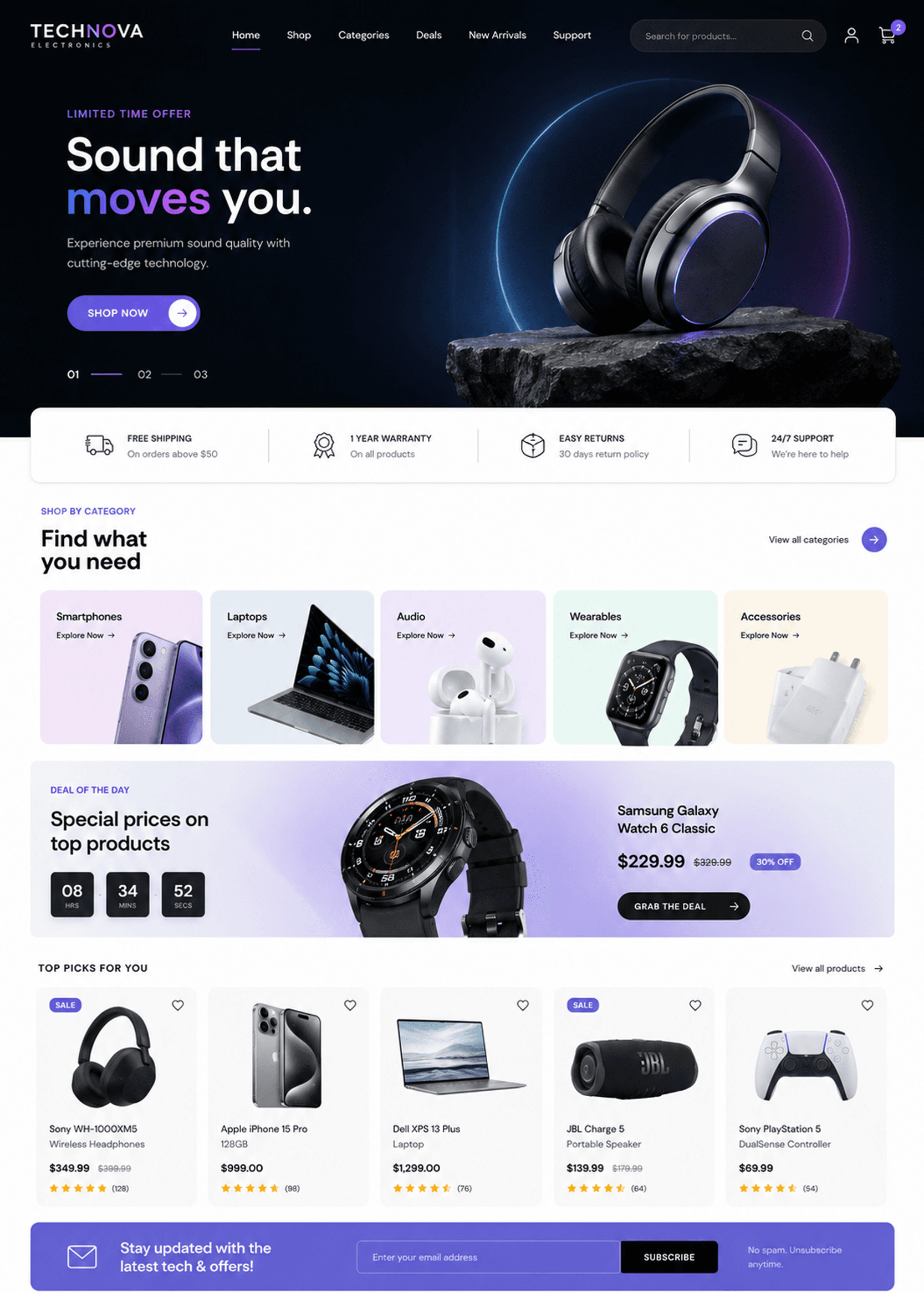
Ecommerce website templates that look like your brand
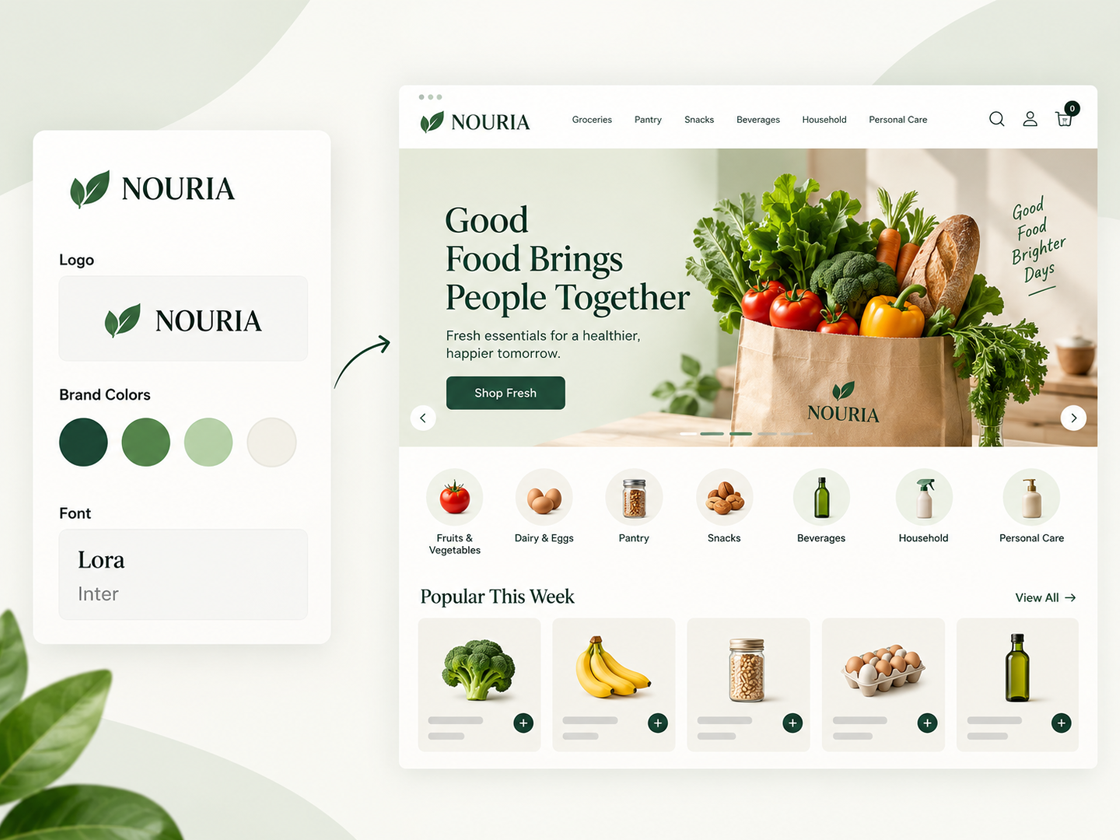
Pick from a library of ecommerce themes built for retail. Apparel, grocery, electronics, and general merchandise layouts are all included. Every theme inherits your brand colors, fonts, and logo automatically, so your storefront matches the rest of your business from day one.
Instead of starting from a blank page, pick from ecommerce website templates suited to your kind of business — apparel, grocery, home living, and more. Each one is built to match your brand from day one.
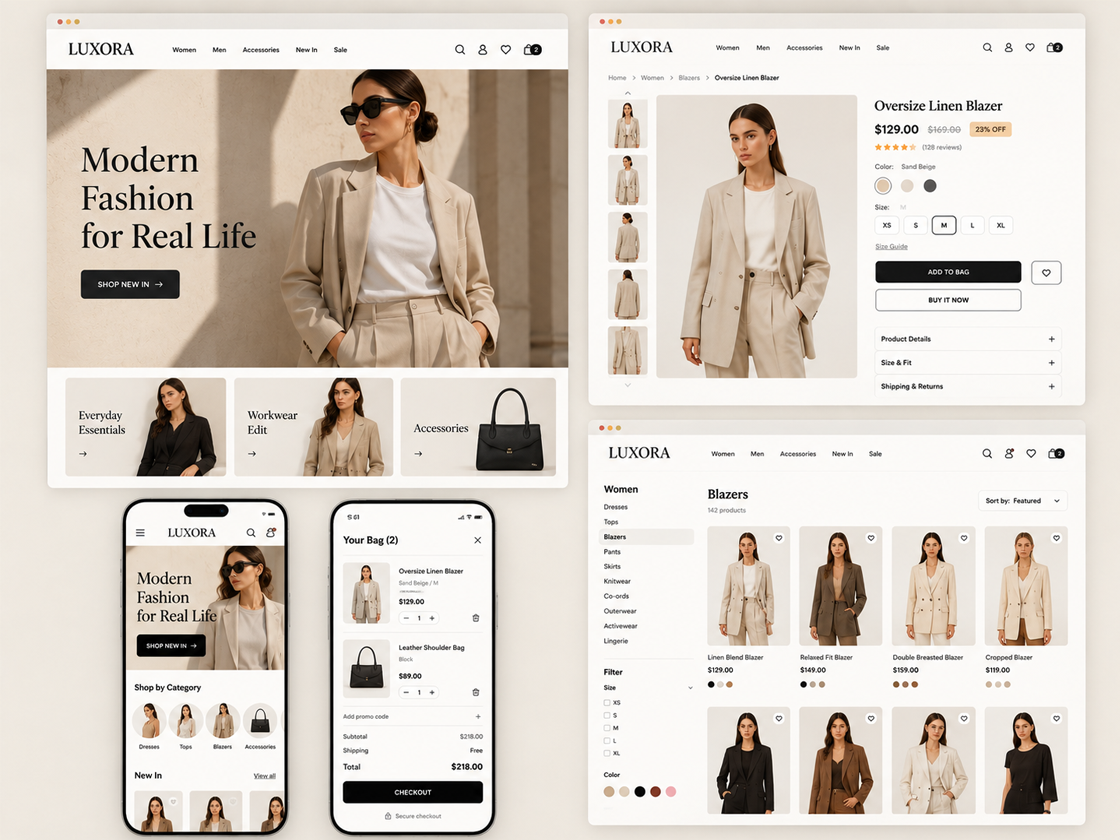
Every theme comes set up with your brand colors, fonts and logo, and configured with the layout, sections and content that fit how you sell — your storefront feels like yours from day one.
Every theme adapts automatically across phones, tablets and desktop, from one shared design. Since most shoppers arrive on mobile first, your storefront is built for that from day one.
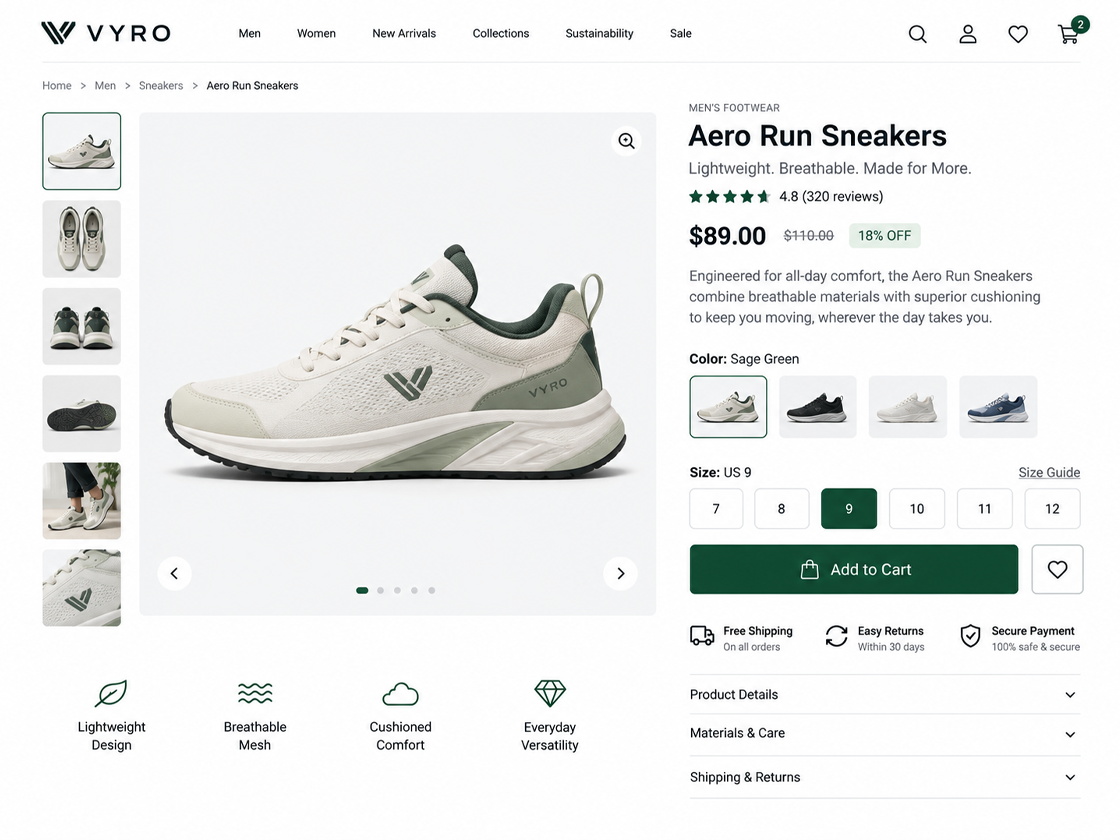
Category pages, filters, and product variants stay fast and organized whether you're listing 50 SKUs or 50,000. Pagination, filtering and variant selection are all tuned for real retail catalogs at scale.
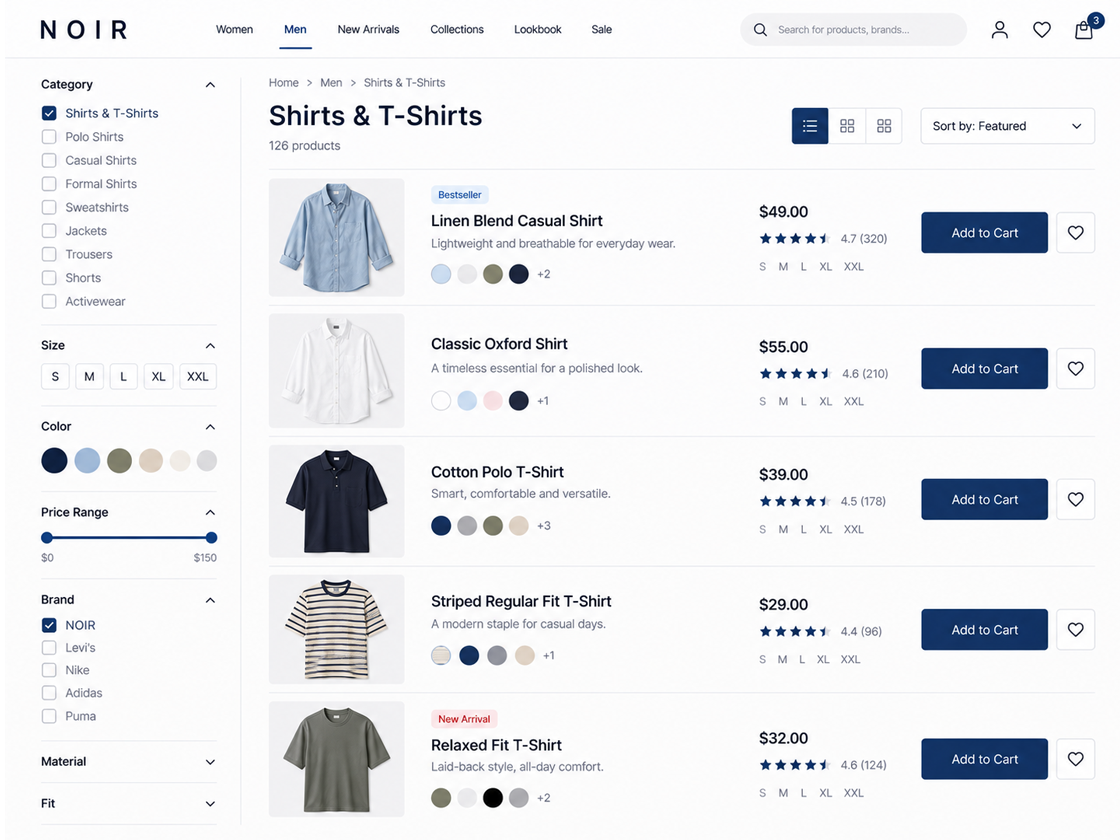
Shoppers find products by name, category, or attribute — sizes and variants included. Search matches on partial input, so shoppers still find the right product from an incomplete or approximate query.
Common questions
What is an ecommerce platform?
An ecommerce platform is the software that runs an online store — the storefront, product catalog, checkout, payments, and order management, all in one system. RDEP's ecommerce platform additionally connects that online store to physical POS, so inventory and sales stay unified across every channel, on one true omnichannel platform.
What is ecommerce analytics?
Ecommerce analytics tracks how an online store is actually performing — traffic sources, conversion rates, product-level sales, and revenue trends. RDEP's ecommerce analytics dashboards scope this to the storefront, with deeper cross-channel reporting available through Master Console.
How do I choose a B2B ecommerce platform?
Look for native B2B pricing tiers and bulk ordering, support for both wholesale and retail buyers on one catalog, and purchase-order or net-terms billing options. RDEP includes B2B storefront features natively, ready to use from the start.
What's a B2B2C ecommerce platform?
A B2B2C ecommerce platform lets a business sell to other businesses and directly to consumers, from the same storefront and catalog. Pricing and access rules separate the two buyer types. RDEP supports this hybrid model natively.
What types of payment gateways are available for ecommerce?
Common ecommerce payment gateway types include card processing, digital wallets, buy-now-pay-later, and bank transfers, plus region-specific processors. RDEP connects to trusted payment gateway partners covering all of these methods, and our team can connect a specific regional processor during onboarding.
Can I manage my product catalog across online and in-store channels from one place?
Yes. RDEP uses a single product catalog for both the online store and physical POS. Stock, pricing, and product details update once and reflect everywhere.
Does RDEP's ecommerce platform connect to physical POS?
Yes. RDEP's ecommerce platform connects natively to RDEP Mobile POS and mobile Self-Checkout, sharing the same catalog, inventory, and reporting layer through Master Console.
What's the difference between RDEP and Shopify?
RDEP includes B2B storefront features natively, where Shopify gates B2B behind its Plus plan, and RDEP's core features run without depending on a plugin marketplace the way Shopify's do. For retailers who also run — or plan to run — a physical store, RDEP additionally unifies online store management with in-store POS, natively, on one platform.
How do I set up shipping for my ecommerce store?
Setting up ecommerce shipping typically means connecting carrier accounts, defining shipping zones and rates, and configuring label generation. RDEP supports multi-carrier setup from one dashboard, and our team maps carrier setup, zones, and rate rules during onboarding.
How does international shipping work for ecommerce orders?
International ecommerce shipping involves customs documentation, duties, and delivery timelines that vary by destination country. RDEP's platform supports international shipping setup alongside multi-currency and multi-language storefronts, so expanding to a new market extends the store you already have.
How do I manage orders from multiple channels in one place?
An order management system pulls orders from every channel you sell on into a single, searchable inbox. RDEP's order management covers filtering, tagging, bulk actions, and draft orders, all from that same inbox in Master Console.
Can customers return or exchange items themselves?
Yes. RDEP supports self-serve returns, so customers can request a return or exchange directly, any time. Return rules — window, restocking fees, and exceptions — are configurable per store.
What is omnichannel ecommerce?
Omnichannel ecommerce means selling across online and physical channels through one connected system — shared inventory, shared customer data, and one unified view of sales. RDEP is built as an omnichannel platform from the ground up: RDEP Ecommerce and RDEP's mobile POS products share the same catalog, inventory, and reporting layer through Master Console.