Post-Purchase Engagement in Retail: Why It Drives Retention and How to Get It Right
May 8, 2026
Walk through the checkout of almost any store and the interaction ends the same way. Payment clears, a receipt is produced, printed or emailed PDF, and the customer walks out. The store turns its attention to the next person in line.
What happens next, in the gap between that transaction and the customer's next visit, is where most retailers are losing revenue they've already earned.
What Post-Purchase Engagement Actually Means
Post-purchase engagement is everything that happens between the moment a customer completes a transaction and the moment they return. It includes the receipt, any follow-up communication, loyalty updates, personalised offers, feedback requests, anything the brand does to stay present and relevant in that gap.
For most brick-and-mortar retailers, the honest answer to "what do we do in that window?" is: not much. A paper receipt goes in a bag. An email might go out the next day, or the next week, as part of a scheduled campaign that has no connection to what the customer actually bought. And then the brand waits.
The problem with waiting is that competitors aren't. The customer's phone is full of messages from other brands. The decision about where to shop next gets made in small, low-attention moments while waiting for a coffee, scrolling before bed, walking between meetings. The retailers who stay present in those moments with something relevant have a material advantage over those who show up late with something generic.
Why the Post-Purchase Window Is the Highest-Value Moment in Retail
Acquisition gets most of the attention in retail marketing. Getting a new customer through the door is expensive, paid media, promotions, brand awareness. But the customer who just completed a transaction is already won. They made the trip, they chose the product, they paid. The cost of re-engaging them is a fraction of the cost of finding a new one.
The timing matters too. A customer who has just bought something is at their highest point of engagement with the brand. The experience is fresh. The product is real and in their hands. Whatever friction existed before the purchase, price comparisons, hesitation, alternatives considered, is gone. This is the moment when a relevant, well-timed message lands best.
That engagement degrades fast. Within 48 hours, the purchase has settled into routine. Within a week, the brand competes with everything else in the customer's life. The post-purchase window is short, and most retailers don't use it.
What the Numbers Say
Digital receipts, when they go beyond a PDF copy of a paper slip, open at rates around 75%. Standard retail marketing emails average 25–30%. That gap is significant, and it's entirely explained by timing.
A Smart Receipt arrives at the moment of highest engagement. It doesn't need to fight for attention in an inbox crowded with promotions. The customer opens it because it's relevant and immediate, proof of purchase, loyalty balance, what comes next. The marketing opportunity inside it inherits that attention.
Retailers who have made the shift from paper to smart digital receipts consistently report two things: customers engage at rates far above their standard email programs, and the cost of the switch pays back fast.
The Four Things Post-Purchase Engagement Should Do
Not every follow-up communication is post-purchase engagement. A generic newsletter sent three days after a transaction is scheduled marketing, not a response to what the customer just did. Real post-purchase engagement has specific characteristics.
1. It arrives in the moment
The most important variable is timing. A message that reaches the customer within minutes of checkout while they're still in a positive frame around the purchase, is categorically different from a message that arrives 72 hours later. Smart Receipt is the natural vehicle for this. It belongs at the point of transaction, it's expected, and it arrives before the customer has moved on.
2. It reflects what actually happened
A post-purchase offer tied to what the customer just bought, a complementary product, a category they've shopped before, the next loyalty milestone based on today's transaction, performs differently from a generic promotion. The customer notices the relevance. That relevance is what drives the click, the return, the next purchase.
3. It opens a two-way channel
Post-purchase engagement isn't only about outbound communication. A customer who has just had a positive experience is primed to give feedback. A Smart Receipt that makes feedback collection a single tap, rather than a form that requires navigating to a separate page, logging in, and answering five questions, captures responses at the moment they are most honest and most actionable. The store learns something useful. The customer feels heard.
4. It connects back to the store
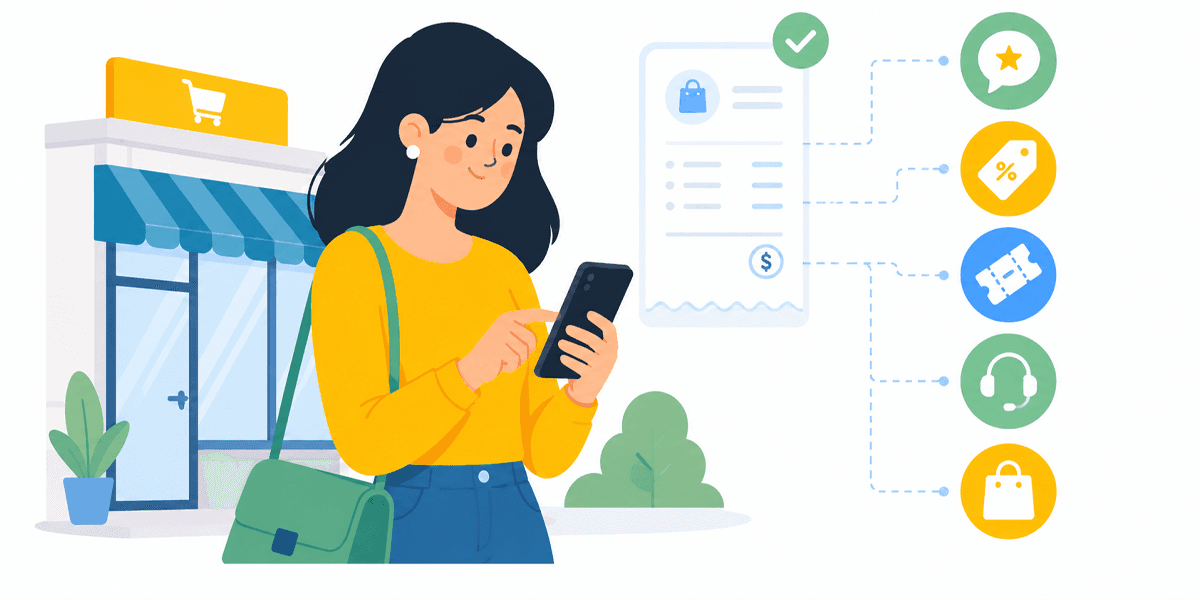
Getting a customer to re-engage is only useful if there's somewhere easy for them to go. A Smart Receipt that carries a direct WhatsApp link, a call option, or a one-tap route to a next-visit offer closes the loop, the post-purchase communication becomes the first step of the next transaction.
The Retention Case
Acquiring a new customer costs five to seven times more than retaining an existing one. That's a number most retail leaders know. The fewer apply it to where they put their technology investment.
Post-purchase engagement is, at its core, a retention tool. It doesn't bring in new customers, it keeps the ones a retailer has already earned. And because it operates in the window when engagement is highest and cost is lowest, it's one of the most efficient levers available to a retail operation of any size.
The retailers doing this well aren't necessarily the ones with the biggest marketing budgets. They're the ones who recognised that the moment after the sale is still part of the sale and built accordingly.
Want to build a future proof, post-purchase engagement strategy? Contact us today!